
Lead generation website systems
A lead generation website should turn interest into organized sales opportunities.
studiogecko.dev designs landing pages, quote paths, forms, tracking, and follow-up workflows that help the right visitors ask for help and help the business respond with useful context.
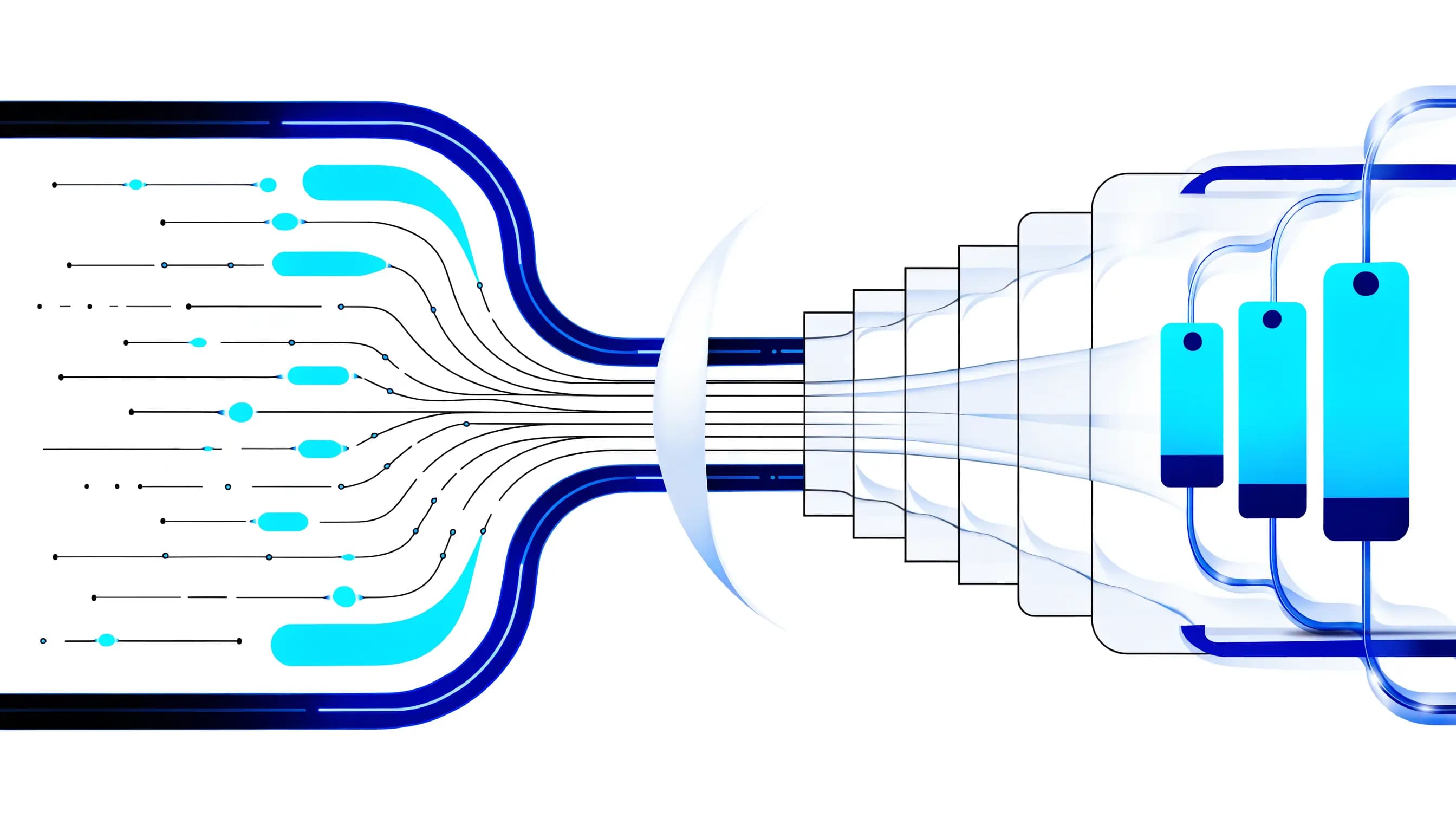
Capture, qualification, routing, and follow-up reduce noise before it reaches the team.
Service overview
What lead generation should do for the business.
Lead generation website design is the system between a visitor's first question and the business's next sales action. It includes the page that earns attention, the offer and proof that build confidence, the form that collects the right details, the confirmation that sets expectations, and the workflow that routes the inquiry to the right place.
More form submissions are not automatically better. A useful lead system balances conversion with qualification so the business receives enough context to prioritize and respond. It also makes sources, campaign intent, and follow-up status easier to understand without sending private form details to analytics platforms.
Problems solved
Forms collect too little context or ask so much that qualified visitors abandon them.
Calls to action are generic, inconsistent, or disconnected from the page's intent.
New inquiries arrive in an inbox without ownership, status, or a reliable next step.
Campaign traffic lands on broad pages that do not match the visitor's reason for clicking.
Analytics measures visits but does not clarify which conversion paths deserve attention.
What is included
Offer, audience, and lead-quality definition
Landing page, quote flow, or consultation-path structure
Accessible, mobile-friendly forms with clear validation
Confirmation states and expectation-setting messages
Lead routing, notification, and ownership planning
Privacy-safe source and conversion event structure
Spam protection, server-side validation, and duplicate-submission controls
Documentation for follow-up stages and future CRM integration
Expected outcomes
More useful inquiry context for sales or service follow-up.
A clearer path from page visit to quote, booking, or consultation request.
Fewer leads lost between form submission and owner or team response.
Better visibility into the pages and sources creating meaningful actions.
A foundation that can later connect to a CRM, portal, or automation workflow.
Process
A cleaner path from idea to launch.
Step 1
Define a useful lead
We identify the details that change how the business responds: service need, location, timeline, project type, urgency, and any genuine qualification criteria. The form should collect useful context without becoming an interrogation.
Step 2
Match the page to intent
The message, proof, offer, and call to action are shaped around why the visitor arrived. A campaign landing page, local service page, and high-consideration quote page should not ask for the same decision in the same way.
Step 3
Design the form and confirmation
Fields, labels, validation, consent language, mobile keyboard behavior, error states, and the post-submit experience are treated as part of the conversion path rather than technical cleanup.
Step 4
Route and protect the inquiry
Server-side validation, spam controls, notification rules, recipient configuration, and a structured storage or CRM path help keep private information out of public logs and analytics.
Step 5
Measure and improve
After launch, privacy-safe events and source data can show which pages and campaigns generate meaningful actions. Improvements are based on observed friction, not arbitrary button changes.
How we think about the work
Decisions that keep the service useful after launch.
Conversion starts before the form
A form cannot rescue an unclear offer. The page must make the service, fit, proof, boundaries, and next step understandable before asking a visitor to share contact information.
Qualification without unnecessary friction
The best fields are the ones that change the response. We remove questions that create work without improving follow-up and use conditional or staged interactions only when they make the experience clearer.
Private data stays out of marketing events
Analytics events can record that a valid submission occurred, but names, emails, phone numbers, messages, and website URLs should not be sent to analytics. Private details belong in protected form and operational systems.
Technology with a job
Tools chosen for maintainability, security, and the workflow.
The stack is selected around the project rather than used as a sales checklist. These are technologies already present in the studiogecko.dev platform and the practical customer benefit each can provide.
Next.js
Supports fast landing pages, server-side form handlers, metadata, route-based campaigns, and reliable confirmation states.
React and TypeScript
Enable accessible conditional forms, clear validation states, and safer integration contracts.
Zod
Provides shared validation rules so the browser experience and server enforcement stay aligned.
Resend
Can deliver structured inquiry notifications and automated confirmations without exposing email credentials to the browser.
Supabase and PostgreSQL
Can store leads, statuses, ownership, and activity history in a structured system when persistence is required.
Google Analytics after consent
Can measure privacy-safe conversion events and route behavior without sending personal form values.
An informed comparison
Lead generation system or contact form?
A contact form is one component. A lead generation system connects the page, form, data, notification, ownership, and follow-up decision.
Basic contact form
A basic form sends a general message to an inbox. It can work for low-volume inquiries, but it often provides little context, limited source visibility, and no status after delivery.
Lead generation system
A complete system matches the page to intent, collects useful qualification details, protects the data, routes the inquiry, confirms receipt, records source context, and prepares the next follow-up action.
Use the simplest flow that supports the business. A small company may only need a focused form and reliable notification. Higher volume, multiple locations, campaigns, or shared sales ownership usually justify a more structured pipeline.
Industry applications
The same service solves different operational problems.
Contractors and home services
Estimate forms can collect service type, location, property context, and timeline while keeping the mobile flow short.
Automotive dealerships
Vehicle inquiries, financing interest, trade-in details, and service requests need distinct routes and clear ownership.
Professional services
Consultation requests benefit from careful expectation setting, service-fit questions, and organized follow-up.
Law firms
Consultation requests need practice-area routing, clear expectations, and a public form that discourages confidential or privileged submissions.
Healthcare practices
General appointment or service-interest flows should avoid unnecessary sensitive information and clearly separate website inquiries from clinical communication.
Restaurants, events, and hospitality
Reservations, catering, private events, and group inquiries require different details, confirmations, and operating follow-up.
Related concept work
See the system in context.

Fictional brand
Solara Poolworks
A premium pool-construction concept that turns dramatic project imagery, financing clarity, and a focused quote path into homeowner confidence.

Fictional brand
Dazed Tomato Social Club
A vivid restaurant concept with expressive typography, fast mobile menu browsing, event promotion, and a reservation path designed for spontaneous decisions.
Questions before you start?
What is a lead generation website?
It is a website structured to help an appropriate visitor understand an offer, trust the business, and complete a useful next action. The system includes the page, call to action, form, confirmation, routing, and follow-up context.
How much does a lead generation system cost?
Cost depends on the number of landing pages, form logic, integrations, routing rules, storage, analytics, and campaign variants. A focused quote flow is smaller than a multi-location pipeline with CRM automation.
How long does implementation take?
Timing depends on offer clarity, copy, form complexity, integrations, and approval speed. The work begins with lead quality and page intent so technical implementation does not automate a confusing process.
Can you improve an existing form?
Yes. We can review field usefulness, labels, mobile usability, validation, consent language, spam controls, confirmation states, routing, and the page content that leads into the form.
Can you build landing pages for paid advertising?
Yes. Campaign pages can align the message, offer, proof, and conversion event with a specific audience. Advertising performance still depends on targeting, demand, budget, and the offer; the page alone cannot guarantee results.
Will you connect the form to a CRM?
CRM integration can be scoped when the provider exposes an appropriate API or integration path. A simpler structured lead store may be better when the team does not yet need a full CRM.
Can leads be routed to different people or locations?
Yes. Routing can use service, location, campaign, availability, or another agreed rule. Ownership and fallback behavior should be explicit so inquiries do not disappear when a condition is incomplete.
How do you prevent spam?
The implementation can combine honeypot fields, rate limits, validation, request checks, and provider-specific protection. No control removes all spam, so the approach balances protection with a usable customer experience.
What analytics are included?
Projects can measure privacy-safe events such as CTA clicks, valid form starts, and confirmed submissions after analytics consent. Personal form values are not used as analytics parameters.
Do you guarantee more leads?
No. Lead volume and quality depend on demand, traffic, reputation, offer, pricing, competition, and follow-up. The service improves the clarity and reliability of the conversion path without promising a business outcome it cannot control.
Can the system send automated follow-ups?
It can send confirmations, reminders, or internal notifications when appropriate. Customer-facing automation should be transparent, useful, and reviewed so it does not create confusing or unwanted communication.
What happens after launch?
We verify the complete submission path, then review real usage and operational feedback. The form, page, routing, analytics, and follow-up workflow can be refined as the business learns which details actually improve response quality.
A practical next step
Discuss whether lead generation is the right fit.
Start with a free website audit or send the project context directly. You will receive a practical response without an automatic client relationship or unsupported outcome promises.