SaaS product strategy and development
SaaS development built around the product, users, and operating model.
studiogecko.dev plans and builds custom SaaS products for founders and businesses that need validated workflows, role-aware access, maintainable architecture, and a credible path from MVP to a dependable web application.

The product surface, roles, data, billing, and administration scale as one system.
Service overview
What saas development should do for the business.
A SaaS product is more than a polished dashboard. It combines a public acquisition experience, authenticated application states, data relationships, permissions, onboarding, notifications, support workflows, and the operational tools needed to manage the product. Those decisions need to agree before development accelerates.
The work begins by defining the smallest useful product: who the users are, which outcome they need, what data the system owns, which actions require permission, and what must be observable after launch. The first release is scoped to prove the workflow without creating a brittle prototype that must be discarded as soon as real use begins.
Problems solved
The product idea is broad, but the first valuable user journey is not defined.
Marketing pages, onboarding, application navigation, and internal administration feel disconnected.
Roles and permissions are being added after screens have already been built.
Data relationships and integrations are unclear, creating rework and unreliable states.
The MVP is treated as a disposable demo instead of a controlled foundation for learning.
Ownership, deployment, monitoring, and maintenance responsibilities have not been planned.
What is included
Product discovery, scope boundaries, user roles, and prioritized MVP workflows
Public product pages, onboarding paths, and authenticated application architecture
Responsive dashboard and application interface using the existing design system
Database relationships, authentication flows, role-aware access, and server-side validation
Transactional email and supported integrations where the product requires them
Error, empty, loading, unauthorized, and recovery states for critical workflows
Production deployment, environment documentation, acceptance testing, and a post-launch backlog
Expected outcomes
A focused SaaS MVP that demonstrates a complete user outcome instead of disconnected features.
An architecture that makes roles, data ownership, and permission boundaries explicit.
A consistent public product story and authenticated application experience.
A maintainable codebase with reusable patterns for future workflows and user states.
Clear ownership of hosting, environments, providers, source code, and post-launch operations.
A practical roadmap that distinguishes implemented, planned, and experimental functionality.
Process
A cleaner path from idea to launch.
Step 1
Define the product boundary
We identify the primary user, the problem the first release must solve, the operational owner, and the assumptions that need validation. Features that do not support that path are deferred intentionally.
Step 2
Map roles, data, and workflows
User journeys are translated into records, relationships, permissions, notifications, and administrative responsibilities before interface work hides structural gaps.
Step 3
Design the system and product language
We create the public product story, authenticated navigation, reusable interface patterns, responsive behavior, and complete states for the workflows in scope.
Step 4
Build and verify the MVP
Implementation proceeds in testable slices. Validation covers permissions, invalid input, duplicate actions, provider failure, mobile layouts, accessibility, and the expected successful paths.
Step 5
Launch with an operating plan
The release includes deployment checks, environment ownership, analytics boundaries, support paths, documentation, and a prioritized roadmap based on actual product learning rather than invented certainty.
How we think about the work
Decisions that keep the service useful after launch.
Architecture before interface volume
The system is organized around product domains, user roles, data ownership, and authorization boundaries. This reduces the risk of building many attractive screens on top of an ambiguous model.
A staged engagement model
Discovery and product definition can be scoped before full implementation. A validated plan may then move into design, MVP development, launch, and ongoing product work with explicit approval points.
Pricing follows product risk
Cost is shaped by roles, data complexity, integrations, billing requirements, migration, administration, compliance needs, and release expectations. A written scope separates the first release from future possibilities.
Timelines follow decision depth
A focused MVP with one primary role can move faster than a multi-tenant product with complex permissions, imports, notifications, and administration. Milestones depend on scope clarity, content, access, and timely review.
Security is a product requirement
Authentication, server-side authorization, input validation, secrets, audit needs, recovery states, and least-privilege access are planned with the workflow. Formal compliance or penetration testing requires qualified specialists when applicable.
Ownership and maintenance stay explicit
The proposal documents source access, infrastructure, licensed services, data responsibilities, deployment, monitoring, and support. Launch creates a controlled baseline, not an implied promise of unlimited future development.
Technology with a job
Tools chosen for maintainability, security, and the workflow.
The stack is selected around the project rather than used as a sales checklist. These are technologies already present in the studiogecko.dev platform and the practical customer benefit each can provide.
Next.js and React
Support a cohesive public product site and responsive authenticated application with server-rendered pages where practical.
TypeScript
Makes data contracts, component behavior, and provider integrations more explicit as the product grows.
Supabase Auth
Provides established authentication primitives while application authorization remains enforced around real roles and records.
PostgreSQL
Supports relational product data, constraints, reporting, and migrations without reducing the product to disconnected documents.
Resend
Supports transactional invitations, confirmations, and notifications when email is part of the approved workflow.
DigitalOcean and GitHub
Provide versioned source, repeatable deployments, environment separation, and an accountable release path for the current stack.
An informed comparison
Custom SaaS development or an off-the-shelf platform?
Buying existing software is often the right first choice. Custom SaaS development is justified when the product itself is the business or when a differentiated workflow cannot be supported responsibly by configuration alone.
Off-the-shelf software
A mature platform can provide faster setup, established support, and predictable capabilities. The tradeoff is accepting its data model, permissions, interface, pricing, and integration boundaries.
Custom SaaS product
A custom product can center the exact user journey, business rules, roles, and product language. It also creates ongoing responsibility for product decisions, security, hosting, support, and maintenance.
Start with existing software when the workflow is common and configuration is sufficient. Consider custom development when the unique product experience or operating model is central to the value being created.
Industry applications
The same service solves different operational problems.
Professional services
A SaaS product can organize intake, recurring deliverables, approvals, records, and client visibility around a specialized service model.
Automotive operations
Role-aware tools can support lead workflows, commissions, service processes, inventory-related operations, and dealership reporting without implying a live integration before one exists.
Home services
Products may coordinate estimates, scheduling context, field documentation, customer updates, and repeat maintenance workflows.
Creators and agencies
A focused platform can manage client requests, assets, approvals, deliverables, and productized service access.
B2B software startups
The MVP can prove one recurring team workflow while preserving a path to stronger administration, integrations, and multi-organization use.
Related concept work
See the system in context.
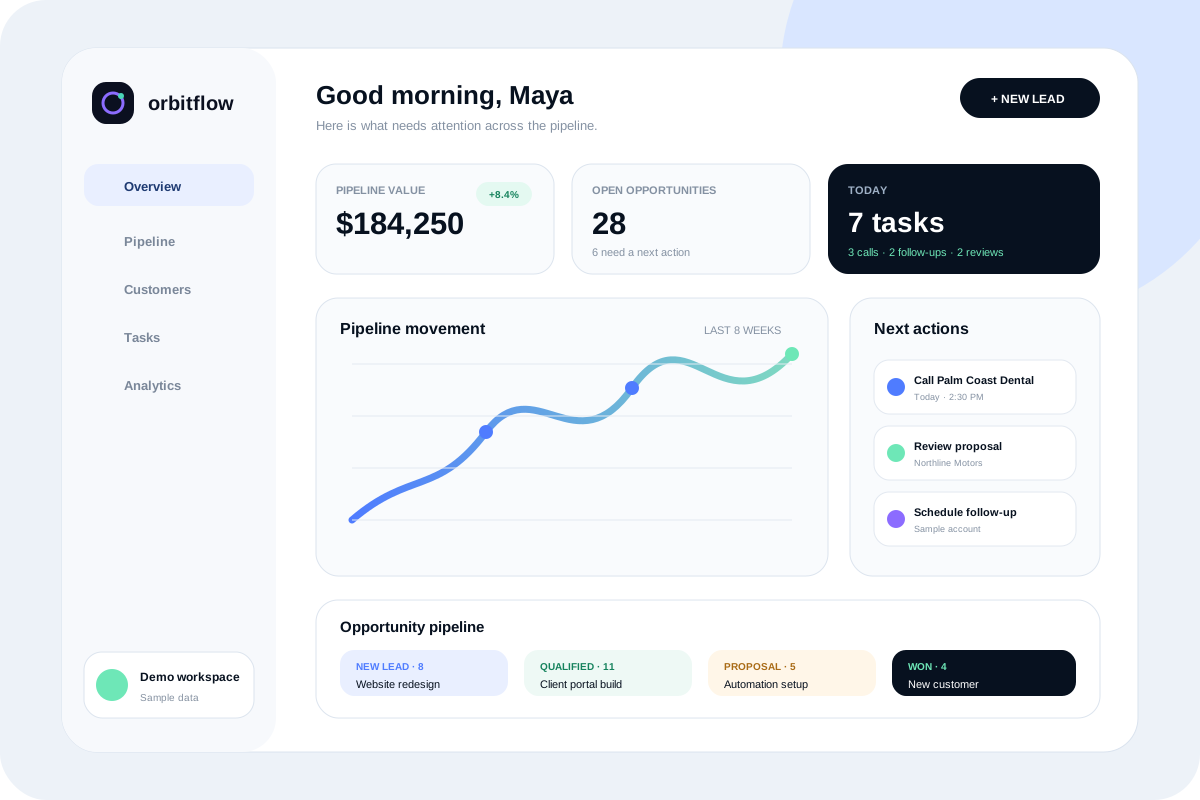
Fictional brand
OrbitFlow
A crisp product site and responsive CRM dashboard concept that makes pipeline health, team tasks, reminders, and customer activity easy to understand.
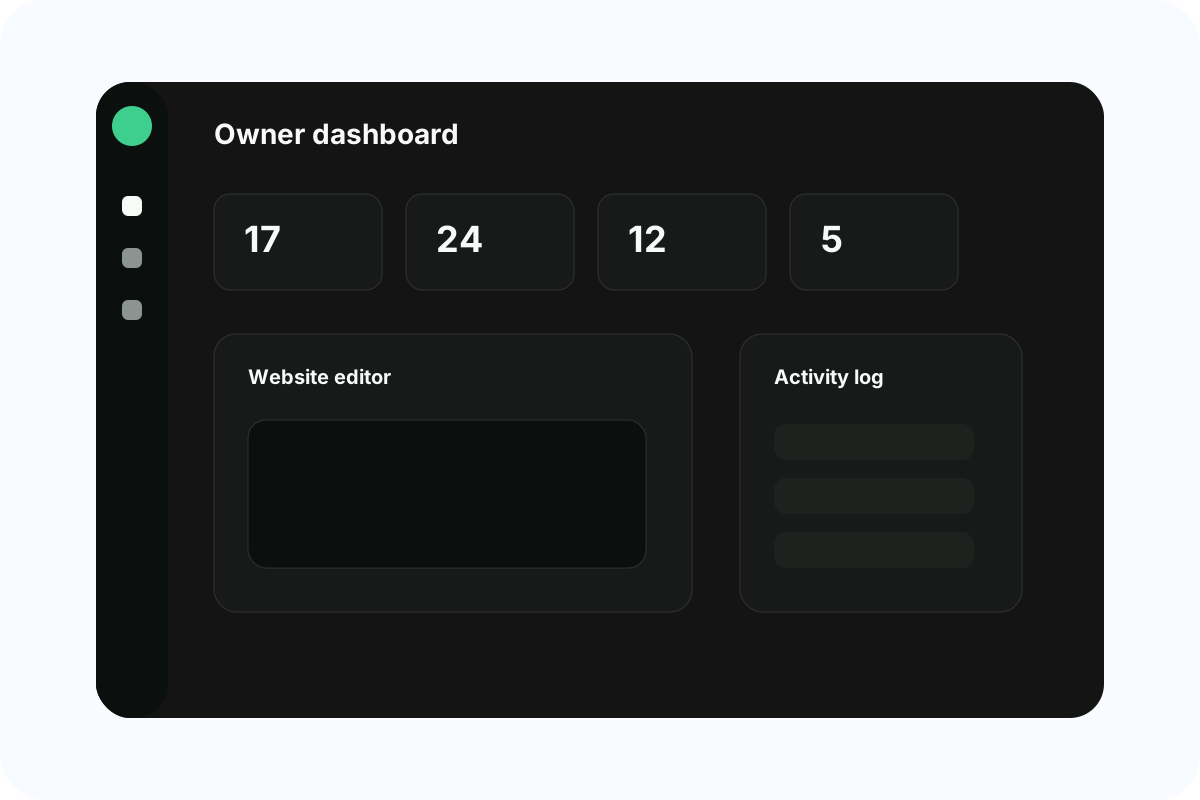
Built by studiogecko.dev
studiogecko.dev Platform
The real internal platform used to organize client websites, leads, requests, media, payments, permissions, and editable public content.
Questions before you start?
How much does SaaS development cost?
Cost depends on product definition, roles, data relationships, integrations, administration, billing, migration, design depth, and launch requirements. A focused MVP is scoped separately from the longer product roadmap.
How long does a SaaS MVP take to build?
Timing depends on how quickly the product boundary and decisions can be resolved. A focused workflow with clear content and one primary role can move faster than a multi-tenant system with complex permissions and integrations.
What is included in SaaS MVP development?
A typical scope may include discovery, user journeys, product architecture, responsive UI, authentication, core data, one complete workflow, administration, email, testing, deployment, and documentation. The written scope defines the actual release.
Can you help refine the product idea before development?
Yes. Product discovery can define the user, problem, workflow, assumptions, roles, data, and first release before committing to a larger implementation.
Can the product support multiple organizations or accounts?
It can when multi-organization behavior is planned from the start. Tenant boundaries, membership, roles, data access, administration, and deletion behavior need explicit design and testing.
How are authentication and permissions handled?
Authentication establishes identity; application authorization controls what that identity may access or change. Server-side checks, role boundaries, recovery, invitation, and unauthorized states are designed around the records in scope.
Can subscriptions and payments be added?
Billing can be scoped when a verified provider and business model are selected. Plans, trials, entitlement rules, failed payments, cancellations, tax responsibilities, and customer support all affect implementation.
Will I own the SaaS source code?
Ownership, repository access, licensed dependencies, provider accounts, reusable studio components, and deployment responsibilities are documented in the proposal before work begins.
Can an existing prototype be rebuilt or stabilized?
Possibly. We first review the current code, data, hosting, dependencies, security boundaries, and whether incremental repair is more responsible than a controlled rebuild.
Does SaaS development include security or compliance certification?
The build includes practical security engineering within scope, but it is not represented as a formal audit, certification, penetration test, or legal compliance review unless qualified specialists are separately engaged.
What happens after the MVP launches?
The team reviews errors, support questions, workflow completion, and product feedback, then prioritizes fixes and improvements. Ongoing development and maintenance are scoped explicitly.
Can the SaaS product integrate with existing systems?
Yes, when supported APIs, webhooks, credentials, rate limits, data ownership, and failure handling are understood. Integration risk is evaluated before it is promised in scope.
A practical next step
Discuss whether saas development is the right fit.
Start with a free website audit or send the project context directly. You will receive a practical response without an automatic client relationship or unsupported outcome promises.